


Has Modernity Failed Us?
In 2018, a British rock band released a song that sounded less like music and more like a news feed having a breakdown. “Love It If We Made It” by ‘The 1975’ was written as an introspective reflection of the social and political climate happening since 2016. It was not a protest song. It was not a call to action. It was something more unsettling, a shrug dressed up as a scream.
“It’s the gem of hope amongst all of the rubble.”
The song listed the wreckages of the modern world, not condemning them but putting them on a pedestal. Immigration. Police brutality. Overdoses. Celebrity. War. All of it compressed into the same flat register, the same driving tempo, and the same unstoppable scroll.
That was 2018. The world it describes has yet to improve. 2026 has only solidified this diagnosis.
Disappointed by the people I’m inspired by
Modernization theorists, such as Walt Rostow, promised that modernity would be linear. Things would get better, institutions would hold, science would solve, and democracy would spread.
The world in 2026 is not in crisis. It is in several crises simultaneously, each one eroding the capacity to address the others. Inequality is increasing. Armed conflicts are at their highest since World War II. Democratic institutions are unravelling not through sudden collapse but through administrative exhaustion. The machinery of the post-war international order (the bodies, the treaties, and normalities) is still running, but the faith that carries it is quietly draining away.
Something has shifted in how people talk about the future. The dominant thought was of the dreaded anxiety that things might get worse. Now, the more common feeling is that things are getting worse in ways we can no longer collectively handle.
In 2026 alone, the world has generated enough crises to fill a decade of headlines. By most standards, any of the crises alone could define a year. In 2026, together they were just another week.
Bury the debt, not the dead
Sudan
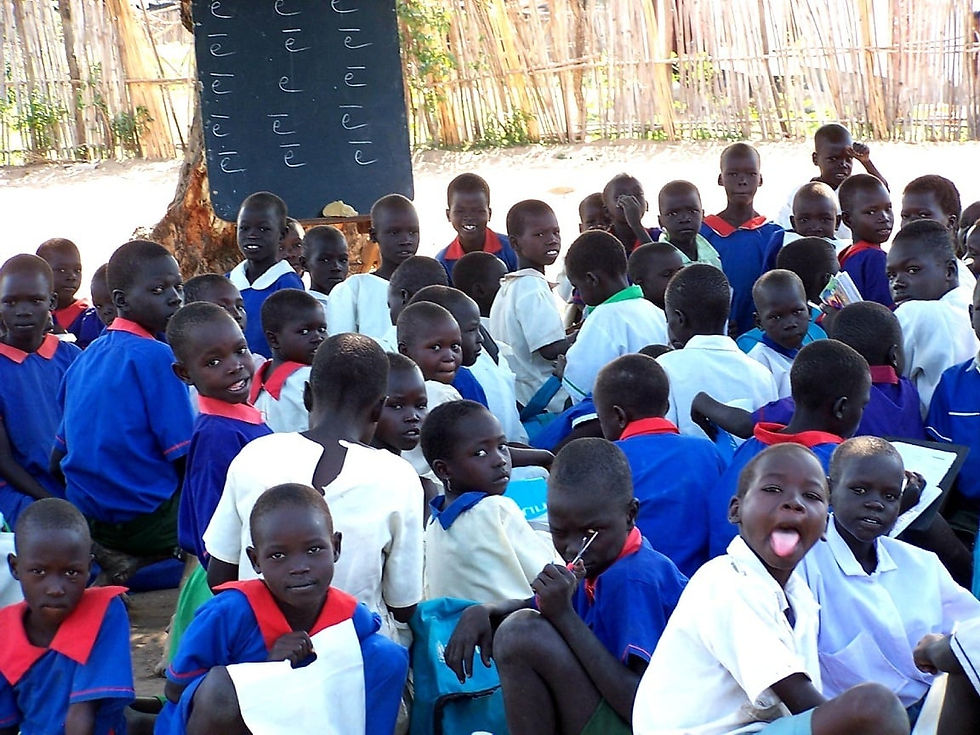
Sudan did not collapse overnight. It unravelled slowly, through years of institutional decay, resource competition, and the quiet withdrawal of international attention. In April 2023, it escalated drastically.
The war between the Sudanese Armed Forces and the Rapid Support Forces has produced one of the worst humanitarian crises. Hundreds of thousands dead. Millions displaced. A famine that the world’s monitoring systems identified, named, and then continued to watch. International responses were quick to offer aid and hold press conferences, yet the world’s attention had already moved on to the next items in the news feed. Sudan is not a failure of awareness, evidence, or access: The world knew. Sudan is a failure of will, which is a different and more damning thing entirely. As noted in Lara Vienings’ recent article on our website, “If You Read One Thing Today, Let It Be This: Sudan,” there is more we can do. Follow the links listed under the article to donate and petition.
The Global South
Across the Global South, the failure of modernity is less a sudden catastrophe than a gradual process. More than five billion people live in countries where debt servicing obligations exceed what their governments spend on health and education combined. The money exists, but it is owed elsewhere. Foreign governments, Western financial centres, and other vulture funds take the debt money– in exchange for what? The Global South receives loans that give few benefits, temporarily at the price of policy control, public services, and long-term wealth.
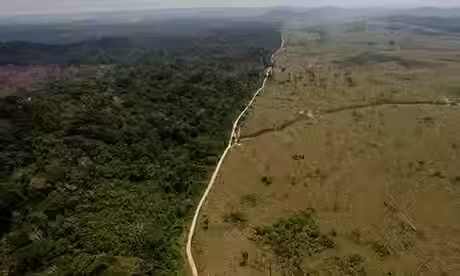
The promise of development has produced growth in some places and resource extraction in others. For instance, Indonesia’s nickel boom has led to the region's economic growth, but local communities face severe forest degradation, water pollution, and contribute to high global carbon emissions. In Latin America, they are facing pressure to extract lithium for the global green initiatives in exchange for promised national development. Extracting lithium requires vast amounts of water, destroying local agricultural livelihoods. Is the “growth” of exporting raw materials worth the disruption of indigenous communities? The civilising mission that the Western world has imposed on underdeveloped countries since the 15th century has fostered distrust of Western powers and international institutions like the IMF and the World Bank.
Youth Protest Movements

The younger generations who have inherited this world have already begun to speak out. In the past two years alone, youth-led protest movements have toppled governments in Bangladesh, Nepal, and Madagascar. In Kenya, demonstrators stormed parliament. In Senegal, a generation that was told to wait its turn has stopped waiting. These grievances of corruption aren’t loud enough. Activists like Kimberly Sandra build connections with peers and amplify their creative voices to ensure the unheard are heard globally. A generation was promised participation in a system and has concluded that the system was never designed to include them. A few Western countries are catching on to the self-serving governments, leading them to corruption.

- Kimberly Sandra, Slay the Ballot
Humanitarian Aid
The international aid built to prevent these kinds of breakdowns is going back on its agreements. The United Nations Relief and Rehabilitation Administration, constructed after the Second World War on the principle that wealthy nations had obligations to the rest, is being dismantled in real time. Funding has collapsed. Programmes that kept children alive, that maintained clinics in conflict zones, and that fed people in famines, are being wound down not because they failed. Because the political will to sustain it has been undermined by internal corruption. According to the Better World Campaign, hundreds of thousands of deaths have been attributed to aid cuts since the beginning of this year alone. These deaths are not caused by war or disease alone, but also caused by decisions made in a budget meeting in a wealthy capital.

According to Refugees International, the global humanitarian U.S. funding has collapsed from $14 billion to $3.7 billion just between 2024 and 2025. This has triggered a domino effect, leaving the most vulnerable populations without food, healthcare, or protection.
The NGO continues, explaining that, in Uganda, food assistance for a million refugees was suspended, and rations were cut by up to 80%. In Afghanistan, the WFP’s monthly reach dropped from 5.6 million people to roughly one million. In Kenya, deaths have been directly linked to food aid reductions.
We’re now left with a cruel paradox: the world is more than capable of solving these crises, yet the political will to do so is evaporating. Governments could do more, take more action, but they are choosing not to, and people are paying the price. It’s a choice and the most prominent example of modern failure.
Generative AI
And finally, let’s talk about the technology that was supposed to fix everything and save us. Artificial Intelligence arrived with the same promise modernity has always made. They share the foundational premise of rational optimization, efficiency, and progress through technological advancement (Geneva Solutions). So far, it has instead proved to be a reflection and amplifier of the values and inequalities of the societies that built it (United Nations Development Programme). According to the Center for Global Development, AI will contribute to the dominance of wealthier countries and will undermine the workforce in underdeveloped countries. As AI robotizes more jobs, workers in poorer countries face displacement without the safety nets needed to maintain their lifestyle.
Policies that governments and international organizations choose to implement will continue to determine AI’s effect on global inequality. Right now, the risks are clear: wealthier nations are moving forward while leaving the rest behind.

The technology is concentrating power rather than distributing it. A handful of corporations, clustered in a small geographic area, control the infrastructure on which the digital world now runs.
The weightless feeling of a search result or generated image is built on supply chains involving mining, water consumption, and energy grids. All are still largely fueled by fossil fuels, high costs that the parts of the world have to endure when they benefit the least from the technology itself.
Modernity has failed us
The question ‘has modernity failed us?’ contains a quiet assumption: that modernity was ever offered to everyone equally. For large parts of the world, the modern project arrived as a long-term project whose aim was to liberate humanity with science and progress, even dating back to the Enlightenment. Modernity then participated in developments like Industrialism, as a structural adjustment as seen through Capitalism and urbanization, and now as a climate consequence (Modernity | Encyclopedia MDPI). The reliance on fossil fuels for industrialization and expansion is the main driver of global warming. Modernity is also a root cause of rising sea levels, ocean warming, deforestation, the intensity of wildfires, and many other environmental disasters (Lemaire, 2025). Yet again, this irreparable debt was accumulated in the name of growth.
If you haven’t figured out the answer to who modernity was built for, let me break it down for you: the modern economy prioritizes and was built for those who can adapt to a constant shift in technology and finance, i.e., not marginalized laborers, aging populations, indigenous and traditional communities, and the environment. Hint: The Global Elite (1%)
Modernity has a geography. Its promises were distributed unevenly, and its costs are even more unevenly distributed. When we ask whether modernity has failed us, we should first ask which version of modernity we mean and who was included in the ‘us’ when it was designed.
I’d love it if we made it
The ‘1975’ did not offer a solution. The song ends where it began: in the middle of the news feed, in the middle of the wreckage. Love it if we made it. In 2026, that wish feels less like optimism and more like the last reasonable option available: the refusal to stop hoping. Which may be the only form of resistance modernity has not found a way to exploit.
Somewhere in Khartoum, someone is waiting for help that has been promised, funded, debated, and delayed. Somewhere in a wealthy capital, a committee is reviewing a resolution that has been carefully worded to not offend anyone nor obligate anything. Somewhere on the internet, a song from 2018 is being streamed by someone who cannot quite understand why it still sounds so accurate.
Link to listen to the song: https://youtu.be/-Wxt5MAQ5v4?si=8CRdXBZNGBp4enoT


Comments