


EN - Call of the Sea: Understanding Orcas, with Guillaume Meurice
“I am fascinated by orcas, as they are full of mysteries.” This is not exactly the opening line you would expect from Guillaume Meurice during an interview. Leaving political satire on the side for a (little) while, we started our interview, immediately setting the stage for a talk about one of his dearest passions: orcas.

For the non-French readers among you, Guillaume Meurice is a 44-year-old comedian, radio host, and author of several essays and novels. He is also an animal rights advocate. It was on this topic that I interviewed him, following the publication of his new novel titled “S’entendre” (English: “Getting Along”), published by Les Arènes editions (March 2026). Using the text as a starting point for our discussion, we went deeper into our relationship, as humans, with this animal that is often quite unknown to us, while still often being the subject of many preconceptions.
“What if understanding orcas could also help us better understand ourselves?”
I have to say that before reading the novel, I did not know that much about orcas. But in this book, Guillaume succeeds in combining pedagogy and narration in a text that reads in one breath. “At first, I wanted to make a book of interviews with experts on orcas and marine life. But I found it more interesting for readers to turn it into a story,” explained Guillaume. He goes on explaining that he discovered that orcas and humans have a lot in common, starting with the fact that orcas, like humans, communicate with each other. “Scientists know that orcas use a language to communicate, but we don’t know yet how to understand it. Actually, this brings a lot of mysteries and makes me so interested in these animals. I sometimes wonder what they could say about humans!” he added with a laugh.
Orcas communicate through echolocation, emitting some sounds and using echoes to evaluate the distance and size of the obstacles that surround them. For this novel, Guillaume asked some questions to bioacousticians, experts who work at the crossroads between biology and the science of sounds. “It is really interesting to understand how this works, and to observe that, like us, orcas can have difficulties in communicating, despite having their own language.” The American Wildlife Federation also explains that some groups of orcas have their own dialect, which they share generation after generation. Guillaume also often makes parallels between the dialogues between humans and the animals’ way of communicating. “We already have some issues communicating between humans, so I don’t think we’ll understand orcas’ language anytime soon!” This key question is reflected in the title of the novel, “S’entendre”, which could mean ‘getting along’, but also ‘listening to one another’ and ‘understanding one another’.
Hence, the topic of language is central, and embodied by the central character, Roxane, who faces challenges in sharing her emotions and in controlling her anger. The young woman often faces emotional outbursts and a feeling of powerlessness. When asked if he shares these feelings, Guillaume answers that he shares her anger, but not her impotence. “I write, and I take action to have a feeling to participate in the fight against climate change. There’s a real sense of fulfillment when you find your place in environmental advocacy. Just bringing this issue to the forefront is already a success, since few people know much about orcas.”
“Did you know that orcas are feminists?”
Guillaume also brought up another point on the similarities between orcas and humans. He explained that orcas, like humans, are social animals. Indeed, like dolphins and other marine animals, these animals hunt in groups, live together, and share responsibilities, as explained by the Journal of Wildlife Biology. In the same way that humans can’t live on their own, orcas must live in groups for their own security, to protect each other. When explaining this aspect of orcas’ life, Guillaume brings forward an interesting element. “Did you know that orcas are feminists? Orcas groups are matriarchies!” And on this point, we can say that there are still differences between humans and orcas…

“Orcas are not threats to humans.”
With this novel, Guillaume also wants to debunk some preconceptions about our relationship with these animals. One of them is that orcas are dangerous to humans. “In the minds of many people, orcas are threats to humans,” he explained. We can also see the preconception in the language we use to talk about these animals: “killer whales.” And this is also depicted in the novel, where orcas are being held responsible for the death of a scientist in Tarifa, Spain. “But reality shows that it’s false! Orcas never killed any humans, and they are not a threat to us. They are social animals who play a lot, but are not dangerous to human beings.” Guillaume concluded on this point by adding: “I really want to show that these animals don’t attack humans in the wild.”
He explained these assumptions by the lack of knowledge people have about orcas, and the fear that they might feel when seeing these animals. Orcas can weigh up to 8 tons, and they are at the top of the food chain. “They can even eat sharks!” he said, quite amazed. The American Wildlife Federation expands on this and explains that orcas follow different hunting techniques, depending on where they live on the globe. Some of them eat fish, like herring and salmon, while others eat sea mammals such as seals, sea lions, and even whales. On average, an orca eats around 500 pounds (225 kilograms) of food each day!
Guillaume even showed himself that it is possible to observe orcas without being attacked by going to Norway to observe them in 2025. “It was an incredible feeling to observe them in their natural habitat, but even more to be observed by them,” explained Guillaume, with a passion that still shines through. “I went to Norway with some friends who are professional divers, scientists, and animal photographers. This experience was fantastic for all of us, rich in emotions and in lessons”. According to Guillaume, this was a very nice way to observe this question of communication between the animals and with humans. “This is where the title of the novel makes real sense.”

Guillaume observing orcas underwater in Norway
“It is time to put an end to the captivity of orcas.”
You might wonder, when reading this article, how Guillaume developed such an interest in orcas. I might have been the 500th person asking him the question, but as always with him, he answered with a lot of enthusiasm. “Well, it all started when I saw the movie ‘Blackfish,’” he started to explain. This movie, released in 2013 and directed by Gabriela Cowperthwaite, is a documentary about the life of Tilikum, an orca captured in Iceland and raised in captivity in SeaWorld park in Orlando, Florida. This animal was involved in the death of three people, two of them being trainers at the park. “The only times when an orca was involved in the death of humans, it happened with captive animals. This is devastating for these animals, condemned to live in a pool and being shown as attractions.” Other occurrences of human death also took place in parks, such as in 1987, when a trainer died after being pulled underwater by Kandu V in San Diego. “After watching this movie, a lot of questions came to my mind, and I wanted to know more about these animals. That really caught my attention and my curiosity.”
Today in France, following a law passed in 2021, dolphinariums and other parks are no longer allowed to put on shows featuring aquatic animals. However, some older facilities continue to keep orcas and other animals in captivity while awaiting their relocation. “Unfortunately, it’s impossible to release captive orcas into the wild because they’ve never grown up in their natural habitat. They don’t know how to hunt, live in groups, or defend themselves,” explains Guillaume. Since the closure of Marineland in Antibes, near Marseille, in January 2025, two orcas still live in a pool. Wikie and Keijo remain in captivity, awaiting a possible transfer to Spain.
Marineland Antibes is the French symbol, but it is an international issue. This movement follows a wider international movement challenging the use of cetaceans in marine parks, from France to Spain, the United States, and beyond. In a kind of playful way, Guillaume added an element to this issue. “I think that a lot of people heard about captivity with the movie “Free Willy!” in the 90s.” More seriously, he continued, “I think that since then, we have improved the question of animal captivity, but it’s still not enough. It's hard to believe that animals are still kept in cages today, especially when we know how intelligent they are and how much they can teach us.” On this, Guillaume told me that it is too early to know if orcas can reveal some consequences of climate change, because orcas do not live in a specific area depending on the sea temperature, but on the availability of food.
“Defending orcas is also part of a bigger fight.”
Guillaume is not only known for writing about orcas but also for his commitment against overfishing, two issues that are quite close. “These questions are linked,” he explained, “because orcas are targeted by fishermen, as they are a direct competitor for them on the availability of fishing resources.” Although orcas are not targeted by overfishing or illegal hunting like other fish, they are still part of a bigger fight for animal protection, on which Guillaume is actively engaged. “I am not a scientist nor an activist in the field for an NGO, and I respect all the people who do this because their action is essential. But I find that making these issues known and raising awareness for people to be educated on this is also very important,” he said.
Outside of his role as comedian, author, and radio host, Guillaume is the patron of an NGO called “C’est Assez!” (“That’s enough!”), that takes action on issues like closing delphinariums and fighting against orcas’ captivity. He is also close to Bloom, another NGO protecting fishing resources and fighting overfishing. “Overall, I try to make things that I find funny. This is the best way to make useful things and to reach out to the biggest number of people,” Guillaume concluded.
“This book is a chance to make this issue known.”
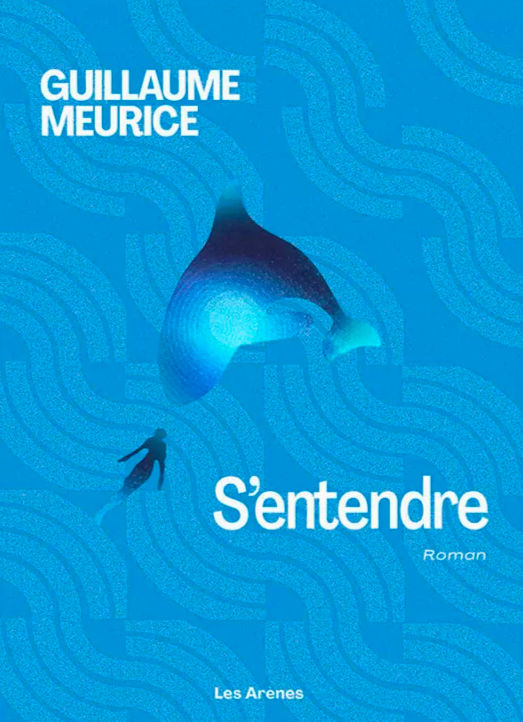
During our conversation, I could really sense the passion that drives Guillaume Meurice and his desire to share his commitment with as wide an audience as possible.
Thank you very much, Guillaume, for your time and for sharing your passion with a Dutch student journal!
Picture: © Les Arènes


Comments